
Do you know what industrial automation is?

Industrial automation is fundamental to improving the control and efficiency of operations in industry. It is not limited to the application of advanced technologies, but also involves cultural changes, new worldviews, and a strong focus on innovation. In the current context, automation has become the foundation of Industry 4.0, integrating itself in such a way […]
Energy efficiency: what is it and why is it important?
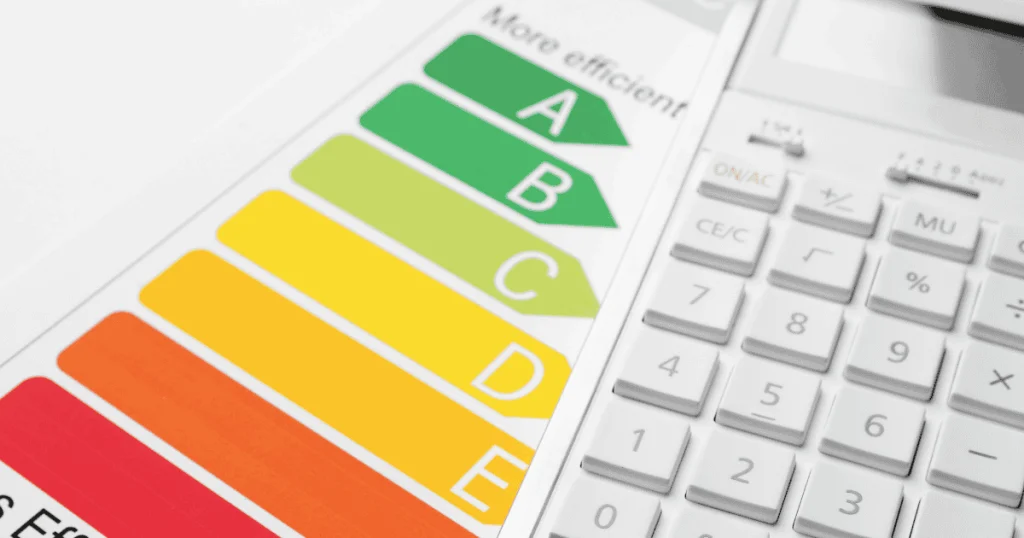
In today's world, where energy costs are constantly rising and concern for the environment has never been greater, energy efficiency has become a central theme. But what exactly does this term mean, and why is it so important for homes, businesses, industries, and the planet as a whole? In this article, we will explore this topic.
New regulation raises safety standards against electric arcs in Brazil.

NBR 17227 defines criteria for risk management, focusing on the calculation of incident energy, hazard signage, and the proper use of PPE. It was published on May 27th, NBR 17227 – Electric arc — Incident energy risk management, precautions and calculation methods. Prepared by the Incident Energy Working Group of CE-003:064.012 […]
Convert BTU to watts: learn how to do it.

The acronym BTU is well known as a measure of the power of refrigeration appliances, especially air conditioners, one of the most popular pieces of equipment in our tropical country. However, a recurring question is how to convert BTU to watts (W) in order to measure energy consumption and the financial cost of air conditioning.
Electrical safety devices: check out the most commonly used ones.

Electrical safety devices are equipment that interrupt the electrical current if it exceeds what a circuit or appliance can handle. The most common are fuses and circuit breakers. Proper sizing and selection of these devices are essential to prevent accidents such as overloads, fires, shocks, and equipment damage, both in residential and industrial settings. […]
Understand the difference between series and parallel circuits.

Electrical and electronic equipment has a circuit responsible for its operation. Knowing the characteristics and differences between series and parallel circuits is very important for correct application, ensuring efficiency and preventing damage to the network or safety. These circuits are used to distribute electrical energy in homes, industries, businesses, or any other type of building. […]
How can I tell if the circuit breaker is burned out?

One of the most recurring problems with circuit breakers is burnout. This can happen for several reasons, and in many cases it's possible to prevent it. With the presence of a Residual Current Device (RCD), other appliances receive greater protection in case of overload in the electrical installations. For this reason, it's important to know what situations can cause this.
Preventive maintenance of industrial electrical systems.

Preventive maintenance in industry aims to minimize the risk of equipment and system failures in order to guarantee continuous and efficient operations. This strategy consists of periodically performing inspections, replacements, adjustments, and cleaning of industrial components, based on predetermined schedules or previously established operating conditions. Furthermore, preventive maintenance focuses on identifying and resolving potential problems...
4 things you need to know about the legal framework for photovoltaic energy.

In January, Law 14.300 of January 6, 2022, which establishes the legal framework for distributed generation in Brazil, was sanctioned by the President of the Republic, Jair Bolsonaro, establishing the new rules for photovoltaic solar energy. The new law establishes the legislation for the modality that allows the self-production of energy from […]
Reduction of 50% in electricity bill with Capacitor Bank

The Brazilian National Electric Energy Agency (Aneel) estimates an average increase of 5.6% in electricity bills this year, affecting consumers in different regions in distinct ways. Industries, which consume 35% of the country's energy, face an average increase of 733/MWh. Electric motors, responsible for 70% of industrial consumption, contribute significantly to this increase. […]